Why Every Business Needs IT Security Services Now
Security services IT encompass a range of solutions designed to protect your business from cyber threats, ensure regulatory compliance, and maintain business continuity. Here's what you need to know:
Core IT Security Services Include:
- Network Security - Firewalls, intrusion detection, and network monitoring
- Endpoint Protection - Antivirus, anti-malware, and device security
- Identity & Access Management - Multi-factor authentication and user controls
- Data Protection - Encryption, backup solutions, and data loss prevention
- Managed Detection & Response (MDR) - 24/7 threat hunting and incident response
- Compliance Support - Meeting HIPAA, PCI DSS, and other regulatory requirements
- Security Training - Employee awareness programs and phishing simulations
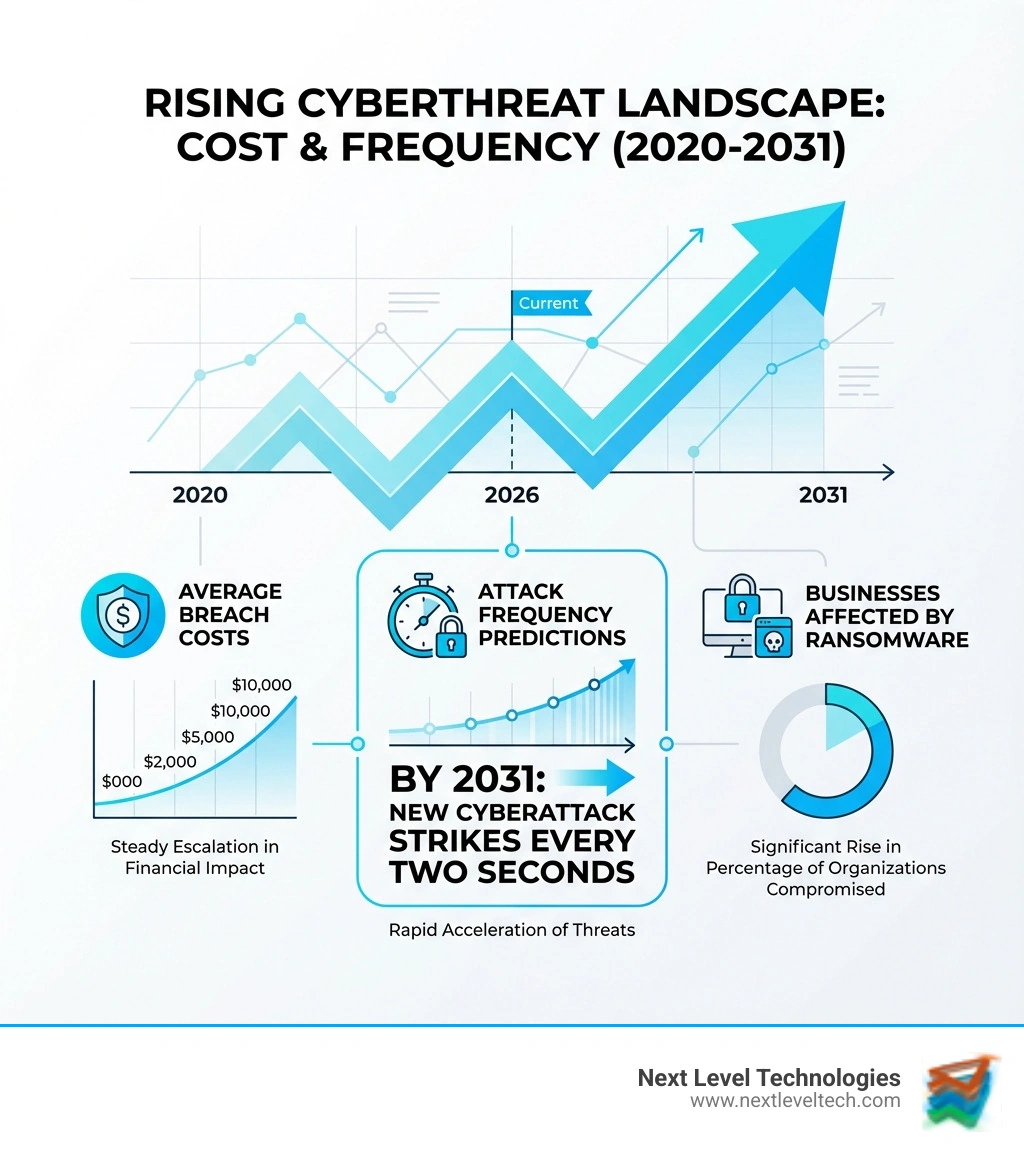
The threat landscape is more dangerous than ever. By 2031, experts predict a new cyberattack will strike a consumer or business every two seconds. For mid-sized businesses dealing with outdated technology and frequent system downtimes, this isn't just a technical problem—it's a business survival issue.
Many businesses don't realize the risks they face by taking a piecemeal approach to security. A data breach doesn't just cost money. It damages your reputation, disrupts operations, and can even put you out of business. The good news? You don't need to figure this out alone.
As Steve Payerle, President of Next Level Technologies, I've spent over 15 years helping businesses across Ohio and West Virginia implement comprehensive security services IT solutions that actually work. Our technically experienced, extensively trained team in Columbus, Ohio and Charleston, WV has seen how the right security strategy transforms businesses from vulnerable targets into resilient operations.
This guide walks you through everything you need to know about IT security services—from understanding what they are, to building a comprehensive strategy, to choosing the right partner for your business.
Find more about security services it:
Understanding the Landscape: What Are IT Security Services?
When we talk about IT security services, we're referring to a broad spectrum of solutions designed to protect an organization's information systems, data, and digital assets from unauthorized access, use, disclosure, disruption, modification, or destruction. It's about safeguarding your digital world.
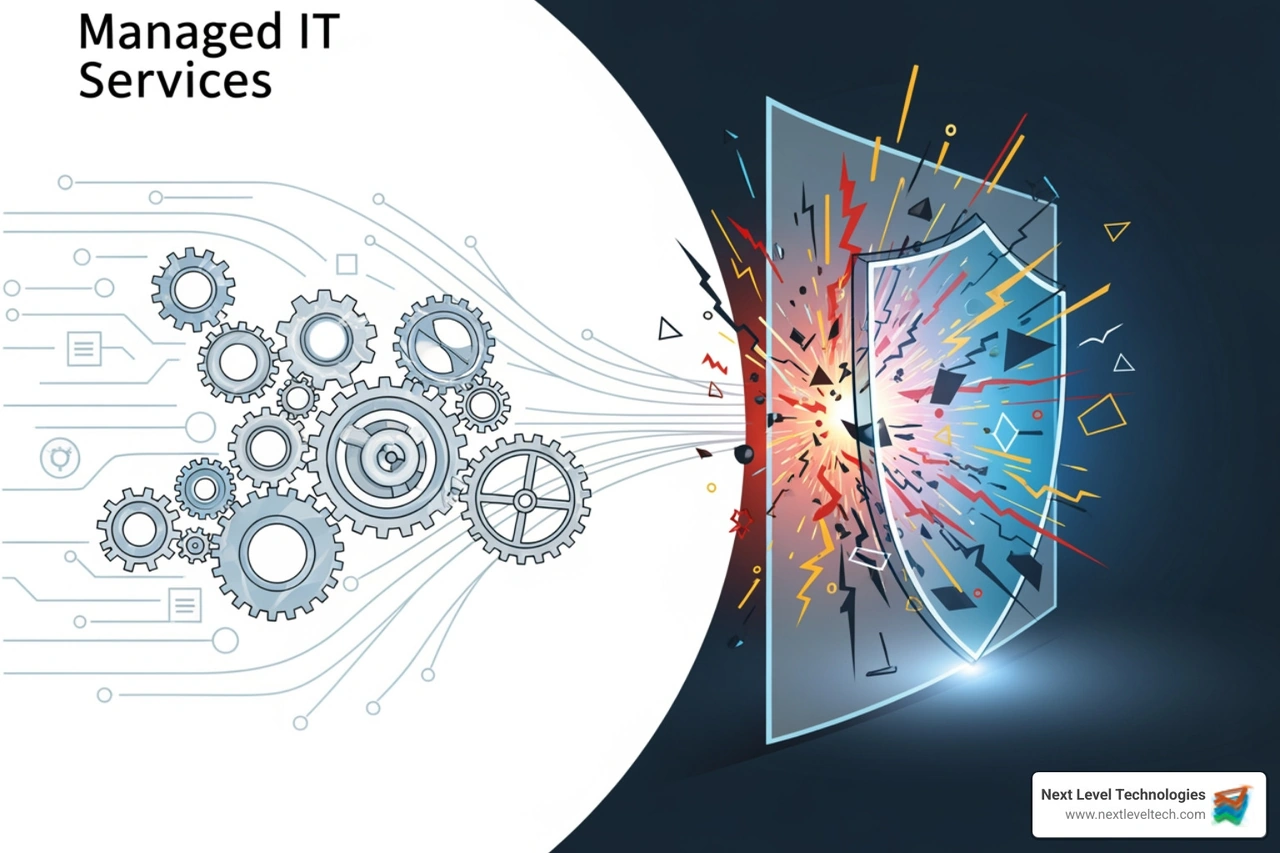
It's important to differentiate between Managed IT Services and Managed Security Services. While often intertwined, they serve distinct purposes:
- Managed IT Services: These services primarily focus on building and maintaining responsive and stable networks and systems. This includes routine IT maintenance, system updates, help desk support, and ensuring your technology infrastructure runs smoothly and efficiently. We catch issues before they become problems, offering remote solutions and implementing disaster recovery plans to ensure business continuity.
- Managed Security Services (MSS): These are specialized services that focus specifically on the ongoing protection against human threats (like cyberattacks) and natural disasters. While Managed IT ensures your systems are up and running, MSS ensures they are secure against malicious intent. As a Managed Security Service Provider (MSSP), our team, with its extensive cybersecurity training and technical experience in Columbus, Ohio, and Charleston, WV, provides continuous oversight to prevent, detect, and respond to security incidents.
For many businesses, the question isn't whether to have security, but how to best implement it. This leads to a choice between an in-house security team or outsourced security. While an in-house team offers direct control, it often comes with significant costs and the challenge of keeping up with rapidly evolving threats. Outsourcing to an MSSP like us provides access to a team of experts, cutting-edge technology, and 24/7 monitoring, often at a fraction of the cost of building an equivalent internal team.
Core Categories of Security Services for Businesses
A robust cybersecurity strategy isn't a one-size-fits-all solution; it's a carefully constructed defense with multiple layers. Here are the core categories of security services IT that businesses rely on:
- Network Security: This is the foundation, protecting your computer networks from intruders. It includes firewalls, which act as barriers between your internal network and external traffic, and Intrusion Detection Systems (IDS), which monitor network traffic for suspicious activity. For more information, explore our network security services.
- Endpoint Protection: Every device connected to your network—laptops, desktops, servers, mobile phones—is an "endpoint" and a potential entry point for attackers. Endpoint protection includes antivirus and anti-malware software, along with more advanced Endpoint Detection and Response (EDR) solutions that continuously monitor for and respond to threats on these devices.
- Application Security: With businesses increasingly relying on various software applications, securing these applications from vulnerabilities is crucial. This involves security measures embedded into the application development lifecycle and continuous monitoring.
- Data Loss Prevention (DLP): Our data is gold. DLP solutions prevent sensitive information from leaving your organization's control, whether accidentally or maliciously. This can involve monitoring, detecting, and blocking sensitive data transfers.
- Identity and Access Management (IAM): This ensures that only authorized individuals can access specific resources. Key components include user authentication, authorization, and the critical role of Online Multi-Factor Authentication (MFA), which adds an extra layer of security beyond just a password.
- Cloud Security: As businesses move to the cloud, securing cloud environments becomes paramount. This involves protecting data, applications, and infrastructure hosted in the cloud. You can learn more about Cloud IT Security.
Managed vs. Advisory: Finding the Right Service Model
When considering security services IT, businesses often face a choice between different service models, each offering unique benefits:
- Managed Security Services: This model provides continuous, 24/7 oversight by a team of experts. It's about proactive threat hunting, monitoring your systems around the clock, and responding to incidents as they happen. This hands-on approach ensures your systems are always protected, allowing you to focus on your core business. Our Managed Cybersecurity Services are designed to offer this continuous vigilance.
- Advisory Services: For businesses that need strategic guidance rather than day-to-day management, advisory services are ideal. This can include services like a Virtual CISO (vCISO) who provides high-level security expertise without the cost of a full-time executive, or risk assessments to identify vulnerabilities and prioritize security investments. We help you with Cybersecurity Audit and Compliance Solutions.
- Implementation Services: Once a security strategy is designed, implementation services focus on deploying the necessary technology and configuring systems correctly. This ensures that new security solutions are integrated seamlessly into your existing IT infrastructure.
- Technical & Training Services: Beyond technology, people are a critical part of your security posture. Technical services ensure your security tools are optimized, while training services focus on upskilling your staff. This includes comprehensive security awareness training to turn your employees into a "human firewall."
Building a Digital Fortress: Key Components of a Comprehensive Cybersecurity Strategy
Building a truly resilient defense against cyber threats is like constructing a multi-layered fortress. It requires a proactive, continuous process that integrates technology, people, and well-defined procedures. Our team, with its deep technical expertise and extensive cybersecurity training in Columbus, Ohio, and Charleston, WV, understands that a strong strategy isn't just about reacting to threats but anticipating them.
Proactive Defense: Threat Prevention and Vulnerability Management
The best defense is a good offense, and in cybersecurity, that means being proactive.
- Security Assessments, Penetration Testing, and Vulnerability Scanning: These services are like regular health check-ups for your IT infrastructure. Security assessments provide a comprehensive overview of your current security posture, while vulnerability scanning identifies known weaknesses in your systems. Penetration testing goes a step further, simulating real-world attacks to find exploitable flaws. These proactive measures help us with Threat Modeling and Risk Analysis.
- Security Policy Development: Clear, concise security policies are essential. They define how your organization handles sensitive data, uses technology, and responds to security incidents. Effective IT Security Policy Compliance ensures everyone is on the same page.
- The Human Firewall: Employee Security Training: Your employees are often the weakest link in your security chain. Regular employee security training, including phishing simulations, transforms them into your strongest defense. We emphasize security awareness because security starts with people.
- Immutable Backups and Ransomware Protection: Ransomware attacks are a terrifying reality, with experts predicting an attack every two seconds by 2031. Immutable backups are a game-changer here. Unlike regular backups, immutable backups are designed to be "untouchable" – they cannot be encrypted, altered, or deleted by attackers. This provides a guaranteed recovery point, even if your primary data and traditional backups are compromised. This is a critical component of any ransomware strategy, complementing other measures like those outlined in How to Remove Ransomware from Computer.
Active Defense: The Role of Managed Detection and Response (MDR)
While prevention is crucial, no defense is 100% foolproof. That's where Managed Detection and Response (MDR) shines.
- What is MDR?: MDR is a sophisticated security services IT offering that combines human-led expertise with AI-supported tools to provide 24/7 threat hunting, detection, and rapid response. It goes beyond traditional antivirus by proactively searching for threats that have bypassed initial defenses.
- How MDR Works: Our MDR services continuously monitor your entire IT environment, looking for anomalies and signs of malicious activity.
- Alert Triage: When an alert is triggered, our experienced security analysts investigate it, distinguishing real threats from false positives.
- Investigation: For confirmed threats, we conduct a deep dive to understand the scope and nature of the attack.
- Guided Response: We then provide clear, actionable guidance to contain and eradicate the threat, often working directly within your environment to neutralize it.
- Benefits of MDR: MDR brings significant advantages. It leads to a faster Mean Time to Respond (MTTR) to incidents, reducing the potential damage. Businesses also experience substantial cost savings, as MDR can reduce the need for additional security FTEs and decrease the overall cost of security operations. For instance, some companies report saving $180K in security FTE costs per year and over $1M+ annually, alongside a 64% improvement in MTTR. This allows your internal teams to focus on higher-value strategic work, rather than chasing endless alerts. You can explore MDR services in more detail.
Reactive Defense: The Importance of Incident Response Planning
Even with the best proactive and active defenses, incidents can still occur. How you react determines the impact on your business.
- Incident Response (IR) Plan: A well-defined Incident Response (IR) Plan is your roadmap for navigating a cyberattack. It outlines roles and responsibilities, communication protocols, and specific steps to take during a security incident. A comprehensive plan covers everything from initial detection to post-incident review. We help you with IT Security Incident Management.
- Key Phases: An effective IR plan typically includes:
- Containment: Limiting the damage and preventing the attack from spreading further.
- Eradication: Removing the threat from your systems.
- Recovery: Restoring affected systems and data to normal operations.
- Post-Mortem Analysis: Learning from the incident to improve future defenses.
- Business Continuity: A strong IR plan is intrinsically linked to business continuity, ensuring your organization can continue critical operations even during a significant security event. This includes having a robust Disaster Recovery Plan for SQL Server Database or other critical systems.
Navigating the Rules: Compliance and the Business Value of Security Services IT
For many businesses, security services IT might seem like a necessary evil—a cost center rather than a strategic investment. However, we see it differently. Robust cybersecurity is a powerful business enabler, fostering customer trust and even driving innovation.
Ensuring Regulatory Compliance with security services it
In today's interconnected world, businesses must steer a complex web of data protection laws and industry regulations. Failing to comply can result in hefty fines, legal action, and severe reputational damage.
- Common Frameworks: Depending on your industry and the data you handle, you might need to comply with standards like:
- HIPAA: For healthcare organizations, protecting patient health information.
- PCI DSS: For any business handling credit card data.
- SOC 2: For service organizations managing customer data, focusing on security, availability, processing integrity, confidentiality, and privacy.Understanding these is crucial for Understanding the Basics of IT Compliance.
- How MSSPs Help: As an MSSP, we play a vital role in helping businesses achieve and maintain compliance. This includes continuous monitoring of your systems to ensure they meet regulatory requirements, providing audit support, and conducting regular IT Compliance Assessments.
- Industry-Specific Needs: Different industries have unique compliance landscapes. We understand the specific cybersecurity requirements for sectors like Cybersecurity for Financial Firms and the stringent demands of Healthcare Network Security Services.
The ROI of Investing in IT Security
The cost of a data breach can be astronomical, far exceeding the investment in preventative security. Financial losses, reputational damage, legal fees, and operational downtime can cripple a business.
Consider the following:
The average cost of a data breach is often measured in millions. IBM has reported a global average of $4.45 million, and that does not include every hidden cost a business may face.
By comparison, managed security services often cost around $5,000 to $50,000+ per year, depending on business size, risk level, and scope of support.
A breach can also lead to lost customer trust, brand damage, regulatory fines, legal fees, downtime, and productivity loss. Investing in managed security services helps reduce those risks while improving customer confidence, business continuity, and your team’s ability to stay focused on core work.
The benefits of investing in robust security services IT extend beyond simply avoiding costs:
- Increased Productivity: When your systems are secure and stable, your employees can work without interruption or fear of cyber threats, leading to higher productivity and innovation.
- Customer Trust: Demonstrating a strong commitment to data security builds confidence with your customers, partners, and stakeholders.
- Cost Savings: Beyond preventing breaches, managed security services can lead to significant operational savings. As mentioned, MDR can save businesses hundreds of thousands in FTE costs annually. Additionally, a strong security posture can lead to lower cyber insurance premiums, especially after a thorough Cyber Insurance Risk Assessment.
Choosing Your Partner: How to Select the Right Security Service Provider
Selecting the right partner for your security services IT is one of the most critical decisions your business will make. It's not just a vendor relationship; it's a partnership built on trust, expertise, and a shared commitment to your security. This requires careful due diligence. Our highly-trained staff, with extensive cybersecurity experience in Columbus, Ohio, and Charleston, WV, are ready to be that partner.
Assessing Your Needs and Identifying Vulnerabilities
Before you can choose a provider, you need to understand what you need to protect and what your current weaknesses are.
- Internal Security Audit: Start with an internal audit to identify your critical assets – what data, systems, and applications are most vital to your business?
- Current Security Posture: Honestly assess your current security posture. Where are you strong, and where are you vulnerable?
- Risk Assessment: Conduct a thorough risk assessment to understand potential threats and their impact.
- Define Goals and Compliance Needs: What are your security objectives? What regulatory compliance frameworks (HIPAA, PCI DSS, etc.) do you need to adhere to?
- Budget: Establish a realistic budget for your security investments.
A great resource for guiding this process is the NIST Guide to IT Security Services, which offers a framework for evaluating and selecting IT security services to improve your overall program.
Key Considerations for Selecting a Provider for security services it
Once you understand your needs, here's what to look for in a security service provider:
- Expertise and Certifications: Look for providers whose teams hold recognized industry certifications (e.g., CISSP, CompTIA Security+). Their technical experience and continuous training are paramount.
- Technology Stack and Integration Capabilities: Do they use cutting-edge tools? Can their solutions integrate seamlessly with your existing IT environment without forcing costly overhauls?
- Service Level Agreements (SLAs): A clear IT Service Level Agreement outlines the provider's commitments regarding response times, uptime, and other critical metrics.
- Scalability: Can their services grow with your business? Whether you're a small business or a rapidly expanding enterprise, your security needs will evolve.
- Services for SMBs: Some providers specialize in large enterprises, others in small to mid-sized businesses (SMBs). Ensure they understand the unique challenges and budget constraints of your business size.
- Local Presence: For businesses in Columbus, Ohio, Worthington, Ohio, or Charleston, WV, a local presence can offer benefits like faster on-site support and a deeper understanding of regional business landscapes.
- Client Trust and Transparency: Look for providers with strong testimonials and a commitment to transparency. You should have direct access to their security analysts, not just sanitized reports. A provider that earns trust by doing the work and not disappearing after the contract is signed is invaluable.
Frequently Asked Questions about IT Security Services
How much do IT security services cost?
The cost of IT security services isn't one-size-fits-all. It typically depends on several factors:
- Pricing Models: Providers often use per-device, per-user, or tiered package pricing models.
- Scope of Services: A basic managed firewall service will cost less than a comprehensive MDR solution with 24/7 threat hunting and incident response.
- Business Size and Complexity: Larger businesses with more users, devices, and complex IT environments will naturally incur higher costs.
- Industry-Specific Needs: Businesses in highly regulated industries (like finance or healthcare) may require more specialized and thus more expensive services to ensure compliance.
While specific figures vary, investing in security is almost always more cost-effective than suffering a data breach. Many managed security services are designed to be cost-effective, providing enterprise-grade security expertise and technology at a predictable monthly rate, saving you significant investment compared to building an in-house security team.
Can't I just use antivirus software?
While antivirus software is a fundamental component of endpoint protection, relying solely on it for your business's cybersecurity is like trying to stop a flood with a teacup. Antivirus primarily protects against known malware signatures. The threat landscape, however, is constantly evolving with new, sophisticated attacks that bypass traditional antivirus.
Effective security services IT employ a layered security approach, combining antivirus with:
- Proactive monitoring and threat hunting (MDR)
- Firewalls and intrusion detection systems
- Vulnerability management
- Employee security training
- Immutable backups
- Advanced endpoint detection and response (EDR)
Even with robust tools like Master Windows Defender, a single solution is insufficient against modern cyber threats. A multi-layered strategy is essential for comprehensive protection.
How do I get started with an IT security service provider?
Getting started with a security service provider is usually a straightforward process designed to ensure the best fit for your business:
- Initial Consultation: We typically begin with a free, no-obligation consultation. This is our chance to listen to your concerns, understand your business goals, and answer any initial questions you might have.
- Findy Call: Following the consultation, we'll schedule a deeper "findy call." During this call, a senior team member will discuss your needs in detail, clarify your challenges, and identify your critical IT infrastructure.
- Security Assessment: Often, the next step involves a preliminary security assessment or an inventory of your key IT infrastructure. This allows us to gain a clear picture of your current environment and identify specific vulnerabilities.
- Proposal and Quotation: Based on the assessment, we'll provide a custom proposal outlining recommended services, a clear scope of work, and a transparent quotation. Most quotes can be completed within a few days.
- Onboarding Process: Once you've chosen us as your partner, we'll initiate a structured onboarding process to integrate our services seamlessly into your operations, ensuring minimal disruption.
Conclusion: Securing Your Future with the Right IT Partner
When a new cyberattack looms every two seconds, robust security services IT are no longer optional—they are absolutely essential for business survival and growth. We've explored how a comprehensive, multi-layered strategy, blending cutting-edge technology with human expertise, forms an impenetrable digital fortress. From proactive threat prevention and vulnerability management to active Managed Detection and Response and meticulous incident response planning, every component plays a vital role.
Moreover, we've highlighted that cybersecurity is a powerful business enabler, not just a cost center. It builds customer trust, ensures regulatory compliance, and fuels innovation, ultimately delivering a strong return on investment.
Choosing the right partner is paramount. Our team at Next Level Technologies, with its extensive technical experience and cybersecurity training in Columbus, Ohio, and Charleston, WV, is dedicated to providing comprehensive solutions and expert support. We believe in transparent partnerships, custom strategies, and continuous vigilance to safeguard your digital assets.
Don't let cyber threats hold your business back. It's time to take control of your security posture. Let us help you steer the complexities of cybersecurity so you can focus on what you do best—growing your business.
Take your business to the next level with managed IT services and support.