A Practical Guide to Columbus Professional IT Services
August 10, 2026


Compare the best healthcare learning management platforms for providers with Next Level Technologies, serving Columbus, Ohio and Charleston, WV.
September 19, 2026

Compare cloud backup services with this guide to backup cloud database service architecture, security, and disaster recovery.
September 12, 2026

Compare cloud based backup services with our ultimate checklist covering encryption, recovery, and compliance for your business.
September 5, 2026
August 10, 2026
Columbus, Ohio, has grown into one of the Midwest's most dynamic business technology hubs. Organizations across Central Ohio face an evolving digital landscape where static infrastructure no longer cuts it. Today, modern organizations rely heavily on Columbus professional services IT to modernize legacy applications, streamline day-to-day operations, and protect critical digital assets.
Whether you operate a mid-sized healthcare organization, a professional services firm, or an enterprise manufacturing facility, connecting with the broader Columbus regional business network demonstrates how central tech-driven strategy has become to modern commerce. Managing this complexity internally can strain administrative teams and IT staff alike. That is why many local leaders partner with trusted experts through Columbus IT Outsourcing to ensure round-the-clock coverage, regulatory compliance, and rapid problem resolution.
At Next Level Technologies, our seasoned engineering staff brings over 20 years of hands-on technical experience and extensive cybersecurity training to help local organizations eliminate technical debt and adopt forward-looking technology strategies.
Professional IT services encompass far more than basic helpdesk ticket resolution. They represent a holistic approach to managing the full technical ecosystem of an enterprise. Key operational focus areas include:
Every industry faces distinct compliance mandates and functional requirements. A generic, one-size-fits-all IT plan routinely fails because it ignores the practical day-to-day realities of frontline staff.
Moving legacy infrastructure to the cloud is rarely a simple "lift-and-shift" exercise. Done correctly, cloud migration acts as a catalyst for business agility, lower overhead, and stronger disaster resiliency.
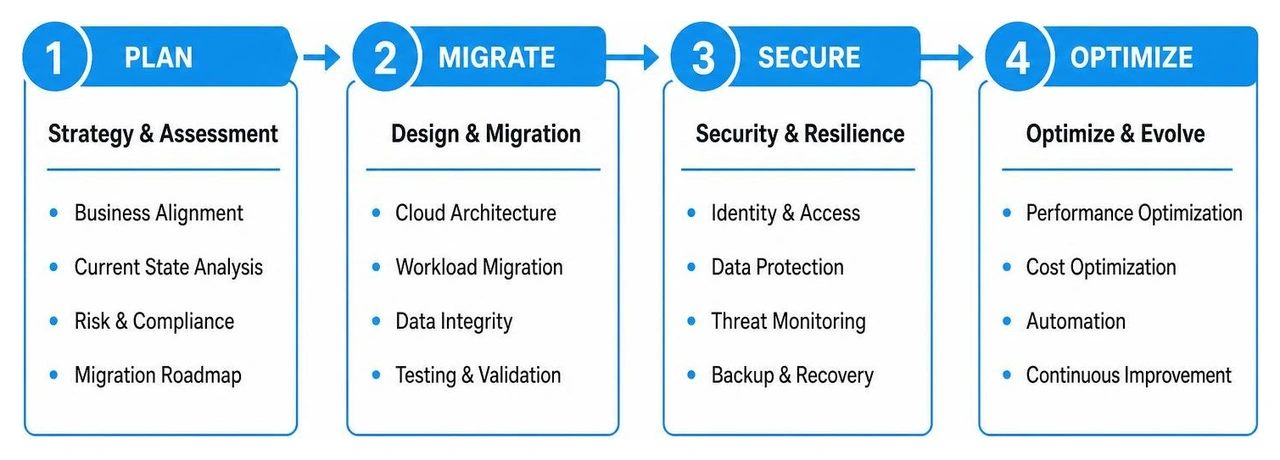
A successful cloud migration strategy focuses on building a resilient long-term business platform rather than merely replacing local server hardware. Protecting corporate databases and workloads during this transition requires robust recovery solutions, such as those detailed in our guide to Cloud Backup Columbus Ohio.
To keep projects on budget and eliminate costly operational downtime, our experienced engineers implement a structured three-phase transformation model:
For organizations managing sensitive files or proprietary customer records, coupling this methodology with comprehensive platform protection guarantees seamless business continuity, as discussed in our guide to Data Recovery Columbus Ohio.
The most advanced cloud platform or ERP tool delivers zero return on investment if internal teams resist using it. Technology projects frequently fail due to poor user adoption rather than software flaws.
Effective change management places human intelligence and active leadership at the center of technical deployment. Key practices for driving successful adoption include:
In 2026, cybersecurity can no longer be treated as a technical luxury or a simple operational checkbox. It is an indispensable foundational pillar of business governance. Cyber threats, automated ransomware bots, and supply chain vulnerabilities pose constant risks to organizations of every size.
Our team’s extensive cybersecurity training allows us to implement defense-in-depth frameworks that protect systems without creating unnecessary friction for your workforce. We explore these innovative defensive techniques further in our article on Next Level Technologies Leading Cybersecurity Innovations in Columbus.
A modern cybersecurity posture rests on three foundational pillars designed to eliminate single points of failure across your digital perimeter:
To review your company's risk profile, explore our full spectrum of Columbus Cybersecurity Services.
Data protection requires combining proactive defense with automated disaster recovery capabilities. Our technical teams maintain automated monitoring, detection, and response tools across endpoints, cloud tenants, and local networks.
In the event of a power outage, hardware failure, or malicious attack, system continuity depends on immediate response protocols. By maintaining isolated offsite cloud backups and running regular system recovery drills, we ensure your critical business software and databases can be restored in hours—not days or weeks.
Artificial intelligence and process automation have evolved from experimental tools into core business drivers. However, successful AI integration relies strictly on foundational data quality and practical strategic alignment.
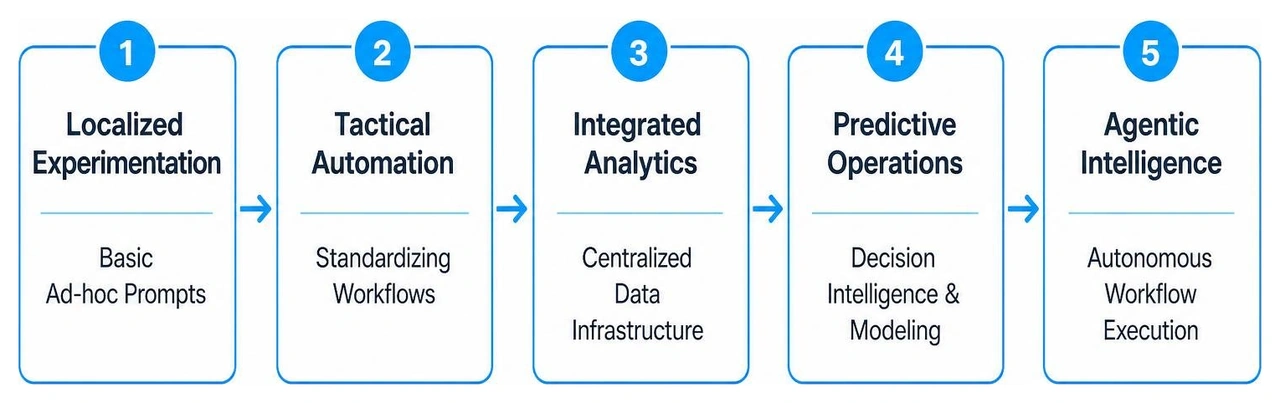
Organizations typically progress through five distinct phases on their path toward full digital maturity:
A critical requirement across every stage is mitigating algorithmic bias. Bias occurs when AI systems yield inaccurate or unfair outputs due to flawed historical data inputs. Conducting routine audits on underlying data sources ensures that automated decision tools remain objective, accurate, and compliant.
Rapid technology shifts are reshaping major market sectors across Ohio:
While enterprise global consultancies offer broad scale, mid-sized businesses often find that regional IT advisors deliver greater accountability, faster response times, and personalized attention.
Partnering with a local partner grounded in the Central Ohio commercial sector offers distinct advantages, as outlined in our comprehensive IT Service Providers Columbus Ohio Guide.
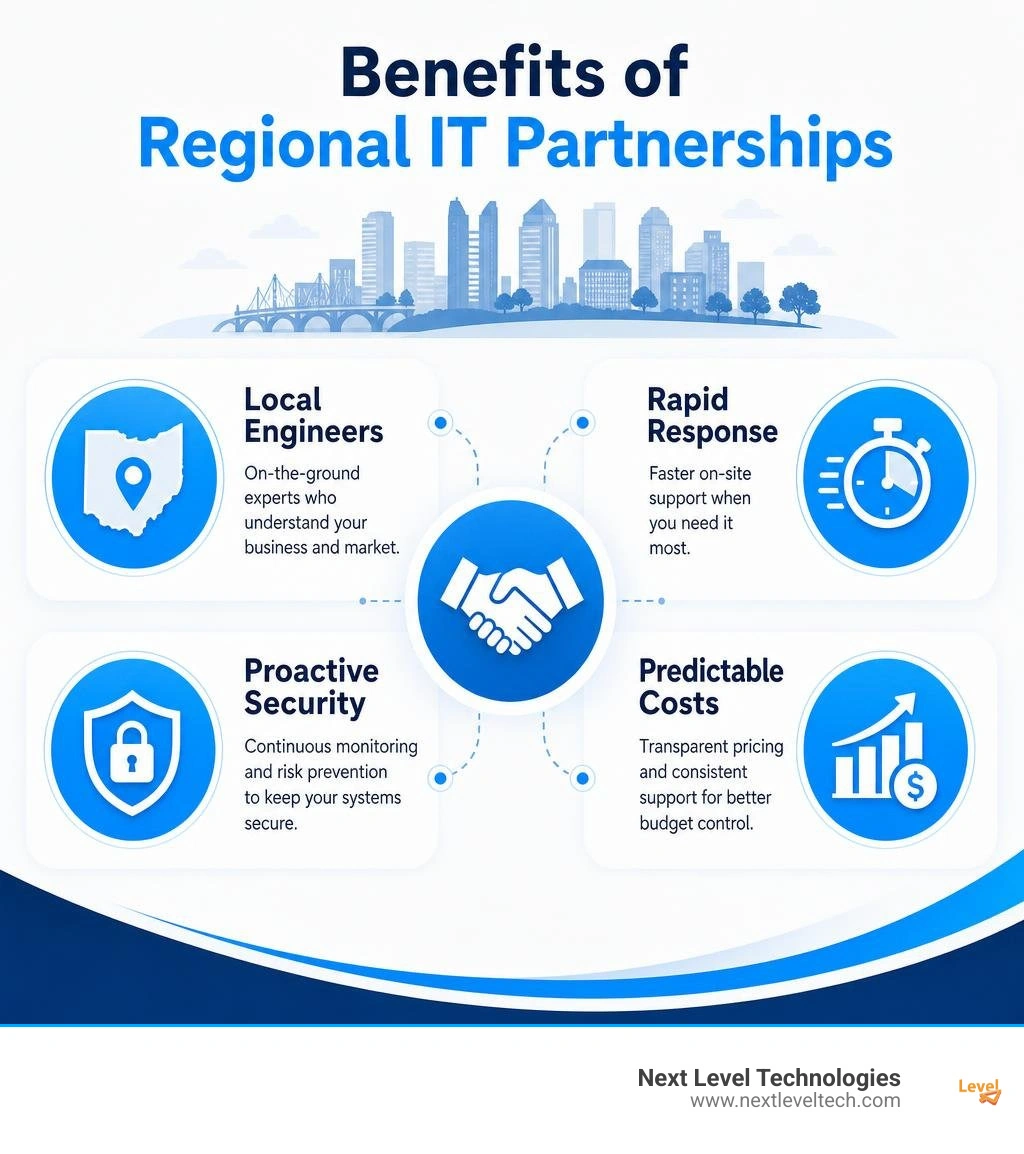
When vetting prospective Columbus professional services IT providers, look past marketing claims and evaluate technical depth, industry track records, and operational processes.
Consider these critical criteria during vendor evaluation:
IT investments should always produce measurable business value. Rather than measuring performance purely by ticket volume, track business-focused metrics that demonstrate clear return on investment:
Professional IT services accelerate cloud migration by providing structured execution frameworks that reduce operational risk. Experienced migration engineers assess your infrastructure, map dependencies, and design high-availability cloud environments before moving a single byte of data.
By executing migrations in structured phases (Define, Execute, Evolve), your business maintains operational continuity, prevents unexpected data loss, and avoids common cloud configuration errors.
An enterprise cybersecurity strategy requires a multi-layered defense centered around three pillars:
Businesses should evaluate AI maturity by reviewing their internal data health, organizational processes, and clear commercial goals before deploying AI tools.
Evaluating your readiness across the 5 Stages of AI Maturity ensures that basic requirements—such as data cleaning, governance controls, user training, and bias mitigation—are addressed first. This prevents organizations from buying expensive AI tools before their underlying data infrastructure is ready to support them.
Selecting the right technology partner is one of the most critical operational decisions your business will make. Modernizing your IT infrastructure requires more than basic troubleshooting; it demands proactive management, deep cybersecurity training, and a clear vision for digital growth.
Next Level Technologies serves organizations from our main location in Columbus, Ohio, alongside our second location in Charleston, WV. With over 20 years of technical expertise, our team provides managed IT support, HIPAA-compliant cybersecurity, resilient cloud solutions, and strategic technology consulting tailored specifically to small and mid-sized businesses, professional service providers, healthcare groups, and non-profits.
If you are ready to eliminate repetitive technical issues, protect your digital assets, and partner with a local team dedicated to your operational success, explore our complete Managed IT Services and IT Support plans today.
Compare the best healthcare learning management platforms for providers with Next Level Technologies, serving Columbus, Ohio and Charleston, WV.
September 19, 2026
Compare cloud backup services with this guide to backup cloud database service architecture, security, and disaster recovery.
September 12, 2026

