Don't Get Cloud-Wrecked: A Guide to Disaster Recovery in the Cloud
February 5, 2026


Compare the best healthcare learning management platforms for providers with Next Level Technologies, serving Columbus, Ohio and Charleston, WV.
September 19, 2026

Compare cloud backup services with this guide to backup cloud database service architecture, security, and disaster recovery.
September 12, 2026
Compare cloud based backup services with our ultimate checklist covering encryption, recovery, and compliance for your business.
September 5, 2026
February 5, 2026
Cloud-based disaster recovery services are managed solutions that protect your business by replicating critical data, applications, and systems to a secure cloud environment. This enables rapid recovery after disasters like cyberattacks, hardware failures, or natural disasters. Key aspects include:
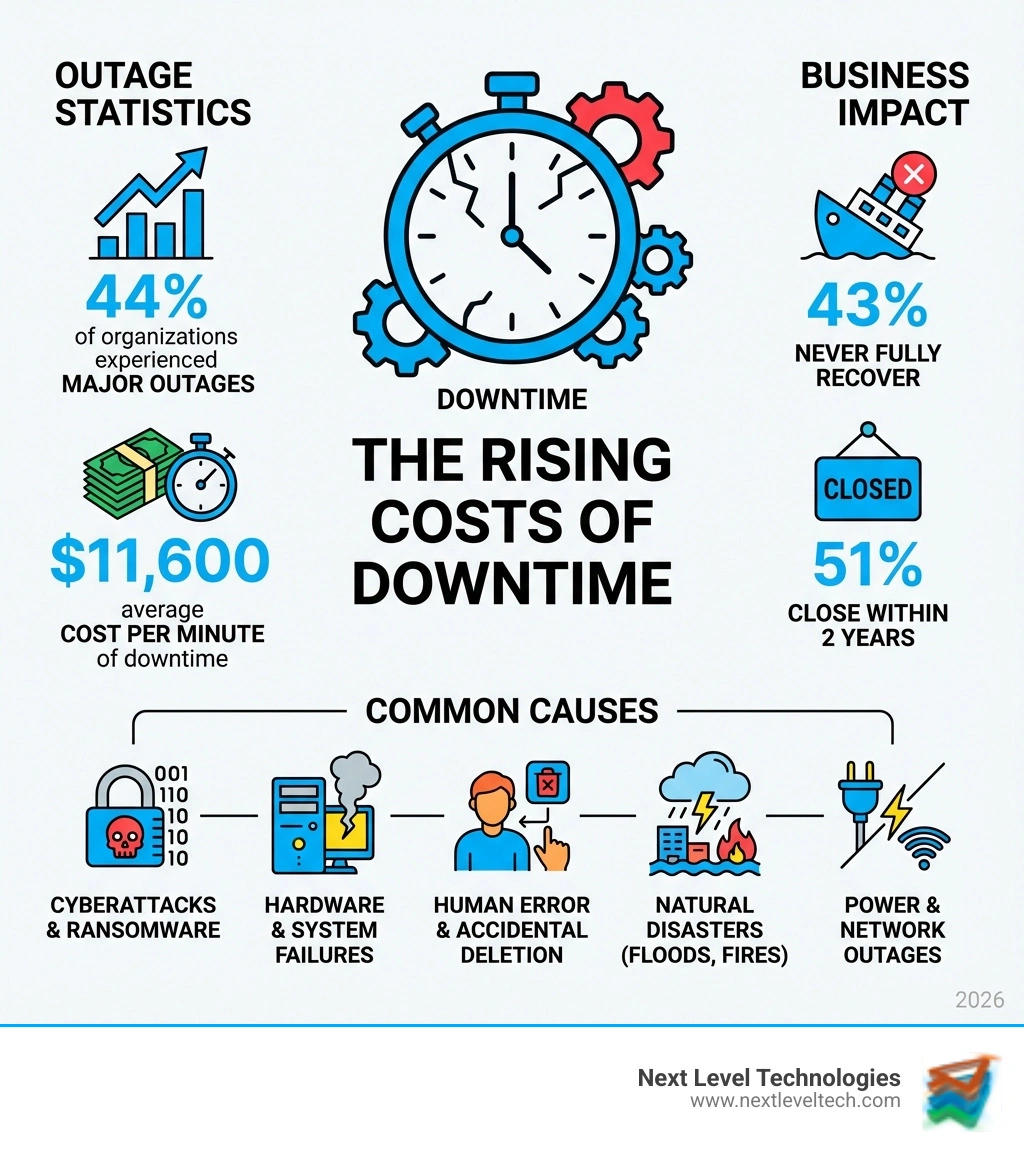
Why this matters now: According to research by the Uptime Institute, 44% of organizations have experienced a major outage. With the average cost of downtime at $11,600 per minute, the stakes are incredibly high. Without a solid recovery plan, 43% of companies never fully recover, and 51% close within two years. Threats like ransomware, hardware failure, human error, and power outages are constant risks.
Traditional disaster recovery required expensive secondary data centers. Cloud-based disaster recovery changes everything, offering a flexible, scalable solution that charges only for what you use. Instead of days or weeks to recover, you can restore systems in minutes or hours. For mid-sized businesses, cloud DR is a survival strategy.
I'm Steve Payerle, and since founding Next Level Technologies in 2009, I've helped businesses across Columbus, Ohio and Charleston, WV implement robust cloud-based disaster recovery services. Our team's extensive technical experience and cybersecurity training means we understand the threats you face and how to build a strong defense.
Cloud-based disaster recovery services glossary:
At its core, cloud disaster recovery (cloud DR) involves storing and maintaining backups of your computing resources on a cloud platform. It provides a ready-to-go duplicate of your IT environment without the physical footprint, allowing organizations in Columbus, OH, or Charleston, WV, to minimize downtime and data loss.
How it works:
This approach ensures your business can quickly resume normal operations after a disruptive event, a crucial part of modern cloud computing and software as a service strategies.
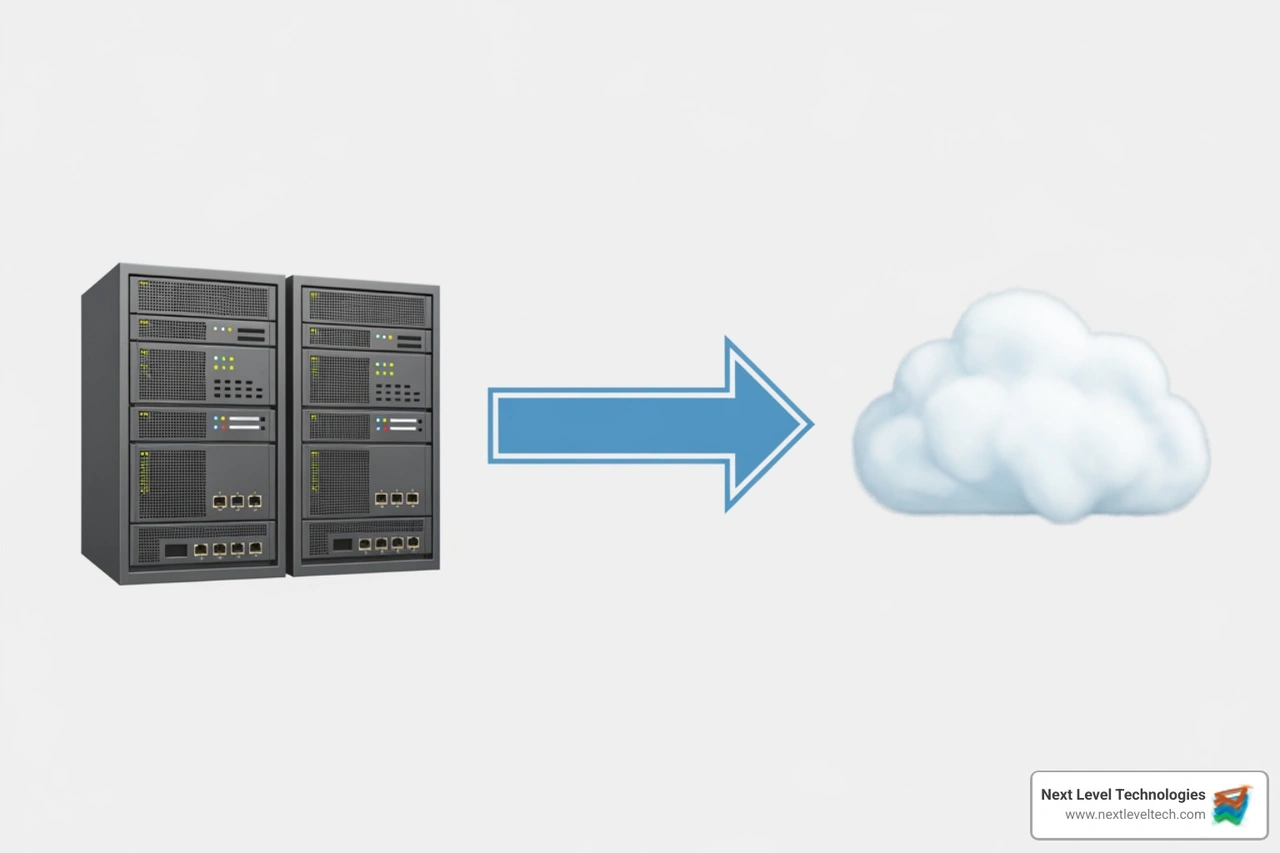
Understanding the difference between cloud and traditional DR highlights its power. Historically, DR meant significant investment in physical infrastructure.
Infrastructure: Traditional disaster recovery depends on a dedicated secondary data center with physical servers, storage, and networking. Cloud disaster recovery uses a virtualized cloud environment instead.
Cost model: Traditional DR usually requires high capital spending for hardware, facilities, and maintenance. Cloud DR shifts costs to an operational model, often with pay-as-you-go pricing.
Management complexity: Traditional DR is harder to manage because it involves maintaining two physical environments and many manual processes. Cloud DR is simpler, with more automation and managed support.
Recovery time (RTO): Traditional recovery can take days or weeks, especially when hardware setup is required. Cloud DR can often restore systems in minutes or hours through automated failover.
Scalability: Traditional DR is limited by available hardware and usually requires major upfront investment to expand. Cloud DR is more flexible and can scale as business needs change.
Geographic redundancy: Traditional DR requires owning or leasing a distant secondary site. Cloud DR can replicate data across separate locations to reduce regional risk.
Testing: Traditional DR testing is often complex, disruptive, and expensive. Cloud DR testing is typically easier, less disruptive, and more practical to run regularly.
Traditional DR required maintaining a secondary data center, involving huge capital expenses (CapEx) for hardware and facilities, plus ongoing operational costs. It was complex, expensive, and often out of reach for many businesses.
Cloud-based disaster recovery services flip this to an OpEx model. You don't build a secondary data center; the cloud provider handles the infrastructure, and you pay for what you consume. This shift makes robust DR accessible to businesses of all sizes, including those we serve in Columbus, OH, and Charleston, WV. Cloud DR also offers superior scalability and flexibility, making it a more agile and cost-effective solution than traditional hardware backup solutions.
Moving your disaster recovery strategy to the cloud provides a significant competitive edge and ensures business continuity.
The benefits are clear and compelling:
These benefits are integral to effective business continuity it solutions.
Two metrics are critical in a disaster:
Cloud-based disaster recovery services excel at achieving aggressive RTO and RPO targets. Traditional methods could mean RTOs of days or weeks. With cloud DR, automated failover allows for RTOs of minutes or hours. Similarly, continuous replication to the cloud minimizes RPO, ensuring near-zero data loss for critical applications. For businesses in Columbus, OH, and Charleston, WV, this means operations can resume with minimal interruption. Assessing how often should you back up company data is key to meeting these objectives.
A key financial advantage of cloud DR is the shift from a capital expenditure (CapEx) to an operational expenditure (OpEx) model. Instead of a large upfront investment in hardware and facilities, you pay for services on a subscription or consumption basis. This "pay-as-you-go" approach offers:
This financial flexibility makes enterprise-grade disaster recovery accessible and affordable. It's a smart investment for businesses looking for cloud backup for small business in Columbus, OH, Worthington, OH, and Charleston, WV.
An effective cloud DR plan is a strategic blueprint for business resilience. At Next Level Technologies, we guide clients through a structured approach. This process is a core part of it disaster recovery planning and is detailed in our disaster recovery plan checklist.
First, we must understand what you're protecting. This involves:
Our team's extensive technical experience is crucial for conducting these assessments for businesses in Columbus, OH, and Charleston, WV.
Next, we define your recovery goals and choose an approach.
This stage brings the plan to life using modern cloud capabilities.
Implementing these solutions requires the specialized knowledge our team at Next Level Technologies provides to clients in the Charleston, WV, and Columbus, OH, areas. We also offer cloud backup as a service to manage these integrations.
Choosing the right partner for your cloud-based disaster recovery services is a critical decision. As a leading managed IT services provider, Next Level Technologies specializes in building robust DR solutions for businesses in Columbus, OH, Charleston, WV, and beyond. Our goal is to simplify disaster recovery, as outlined in our backup and recovery solutions business guide.
At Next Level Technologies, we provide custom cloud-based disaster recovery services to fit your unique needs:
Our cloud backup as a service is designed to provide peace of mind, knowing your data is safe and recoverable.
Selecting the ideal provider requires careful consideration. Here are key factors we emphasize at Next Level Technologies:
A disaster recovery plan is not a "set it and forget it" solution; it requires ongoing vigilance and refinement to be effective.
Regular testing is vital for how it services can strengthen disaster recovery and ensure business continuity for worthington oh businesses.
While related, they are not the same:
Think of backup as a spare tire and disaster recovery as a ready-to-drive spare car.
No. High availability (HA) protects against hardware failure within a single cloud region, but it does not protect against:
A separate DR plan is essential to protect against these broader threats and ensure business continuity.
Testing frequency depends on your business needs, but best practices are:
Regular testing ensures your plan remains effective and your team is prepared.
The question isn't if a disaster will strike, but when. Businesses without a robust DR strategy face staggering costs, downtime, and a high risk of failure. Cloud-based disaster recovery services offer a modern, cost-effective, and efficient solution, providing the resilience your business needs to thrive.
Cloud DR transforms CapEx into manageable OpEx, drastically reduces recovery times, and simplifies management while enhancing security. For businesses in Columbus, OH, Worthington, OH, and Charleston, WV, this means peace of mind and protection against digital threats.
At Next Level Technologies, we are your trusted partner in technology. Our team's deep technical experience and extensive cybersecurity training equip us to design, implement, and manage a custom cloud-based disaster recovery services plan for your unique needs. Don't wait for a disaster to act.
Partner with us for expert managed IT services and support and let us help you build a resilient future.
Compare the best healthcare learning management platforms for providers with Next Level Technologies, serving Columbus, Ohio and Charleston, WV.
September 19, 2026
Compare cloud backup services with this guide to backup cloud database service architecture, security, and disaster recovery.
September 12, 2026
